Sharp AQUOS sense11 Launched in Japan: 157g Body, 5,000mAh Battery, 240Hz OLED and Six Years of Updates
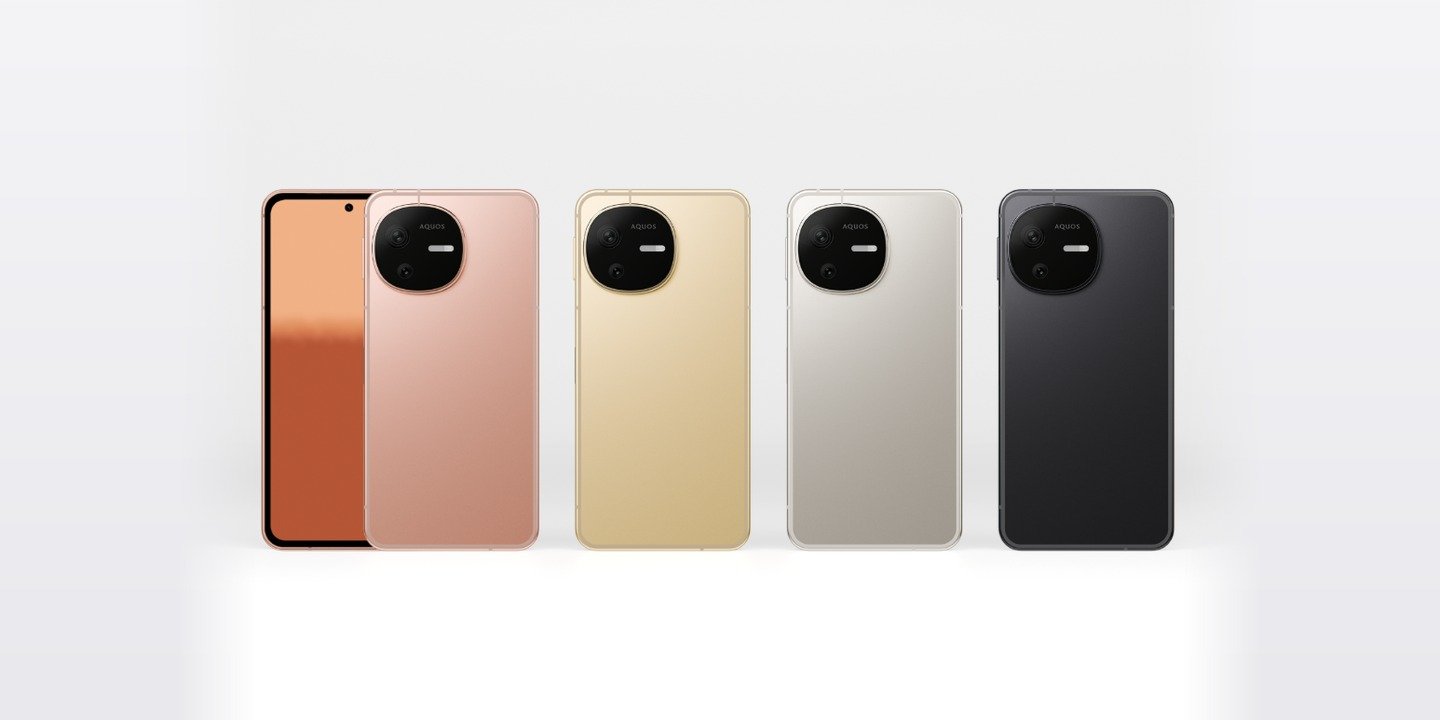
Sharp has unveiled the AQUOS sense11 in Japan, and the headline is how little it weighs for the battery inside. At 157 grams and 7.6mm thick, it still packs a 5,000mAh battery — a combination Sharp says delivers about two days of use on a charge. Sales start in Japan on November 26, 2026, with a SIM-free model available the same day.
Key specs: 6.2-inch Pro IGZO OLED (2,340 x 1,080, 1-240Hz, up to 3,000 nits) | Snapdragon 7s Gen 3 | 8GB/12GB RAM, 128GB/256GB storage | 50.3MP main + 50.3MP ultrawide rear cameras | 32MP front camera | 5,000mAh battery, 36W charging | Android 17 | 157g, 7.6mm thick | IPX5/IPX8/IPX9, IP6X, MIL-STD-810H
Lighter and thinner than the sense10
The sense11 is a clear step down in size from last year’s sense10, dropping from 166g to 157g and from 8.9mm to 7.6mm thick, while keeping the same 5,000mAh battery. The body and camera ring are aluminium, and the phone measures 151 x 73mm, so it should still sit comfortably in a pocket. Sharp’s battery estimate is based on 10 hours of use per day, and the phone also gets the company’s Intelligent Charge feature, which manages charging to slow down battery wear.
A brighter, faster display
The 6.2-inch Pro IGZO OLED display runs at 2,340 x 1,080 pixels with a variable refresh rate from 1Hz up to 240Hz, though the 240Hz mode only works in supported apps and games. Peak brightness reaches 3,000 nits, about 1.5 times brighter than the sense10, which should make the screen far easier to read outdoors.
Same chip, more memory
Under the hood is the Snapdragon 7s Gen 3 — the same chip as the sense10. What changes is memory: the base model now has 8GB of RAM instead of 6GB, and there is a 12GB option too. Storage is 128GB or 256GB, using LPDDR5X RAM and UFS 3.1 storage, and a microSD slot takes cards up to 2TB, which is rare on phones now.
Cameras and AI features
The rear setup pairs two 50.3MP sensors: a main camera with optical image stabilisation and an ultrawide with a 122-degree field of view. The front camera is 32MP. Sharp has added AI tools that remove unwanted people and shadows from photos, cut reflections when shooting through glass, and mask text on signs to protect privacy. All-pixel autofocus and HDR video recording are also included.
Built to last, with six years of updates
The sense11 carries IPX5, IPX8 and IPX9 water resistance, IP6X dust resistance and MIL-STD-810H shock testing. It ships with Android 17, and Sharp promises up to four OS upgrades and six years of security updates. Other features include a slim W-Box speaker, face recognition that works with a mask, a fingerprint sensor, nano-SIM plus eSIM, NFC, Wi-Fi 6E and Bluetooth 5.2. Sharp’s NIAH AI assistant comes preinstalled and launches with a double press of the power key.
Price and availability
The AQUOS sense11 goes on sale in Japan on November 26 in Copper, Gold, Silver and Black. The SIM-free 8GB + 128GB model costs ¥94,600 (about $594), and the 12GB + 256GB model costs ¥119,900 (about $753). That starting price is roughly 51% higher than the sense10’s ¥62,700 base price — a steep jump for a phone that keeps the same chip and battery, even with the extra RAM and slimmer body. Sharp has not announced the sense11 for the US, UK or anywhere else outside Japan, so for now it is a Japan-only phone.
Sharp’s pitch is a light, durable phone that lasts for years, and on paper the sense11 delivers that. The question is whether buyers in Japan will accept the higher price for what is mostly a refinement of last year’s phone. Like the recently listed Redmi R80 5G, it shows how much battery budget phones now pack.